Unit 3 of Algebra 1 is all about solving equations and their applications. We start off with multi-step equations, because 1-step and 2-step equations were covered in Unit 1: Foundations of Algebra. 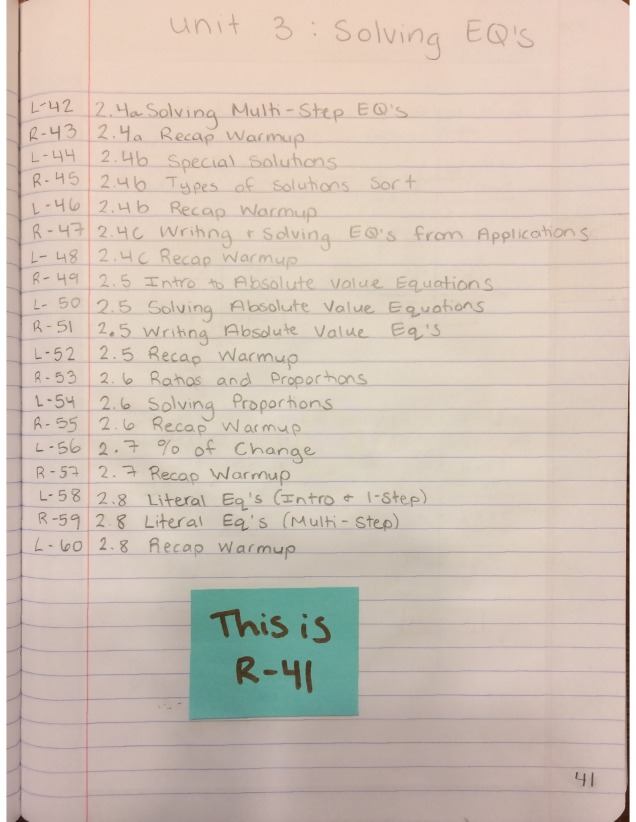
Day 1: Multi-Step Equations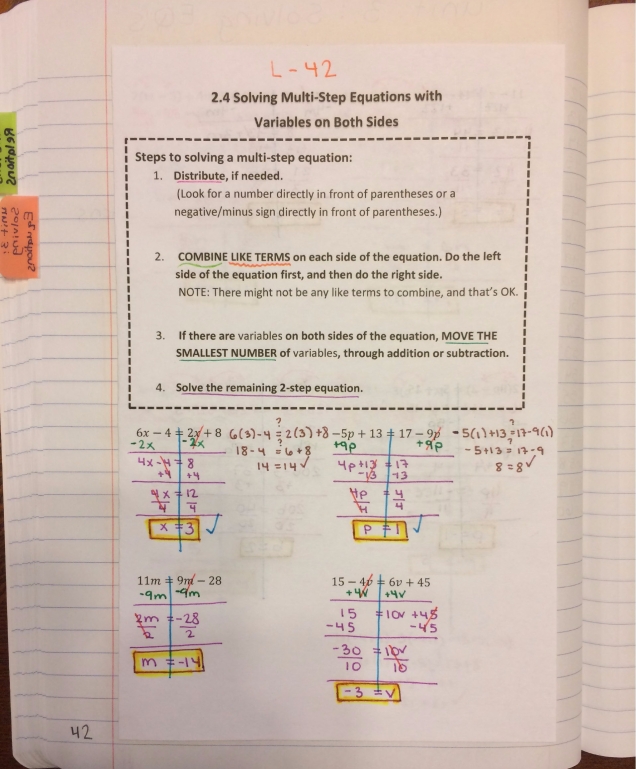
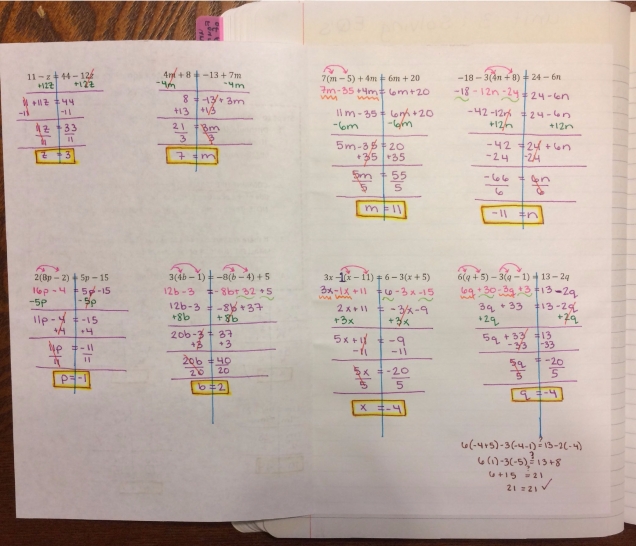
In addition to the notes that went into our composition books, students were each given a full-sized flowchart over solving one-variable equations. We did an example as a class, and then I also keep a class set laminated so students can use them with dry-erase markers whenever they like. Students referenced their notes and the laminated flowcharts while working on homework in class. 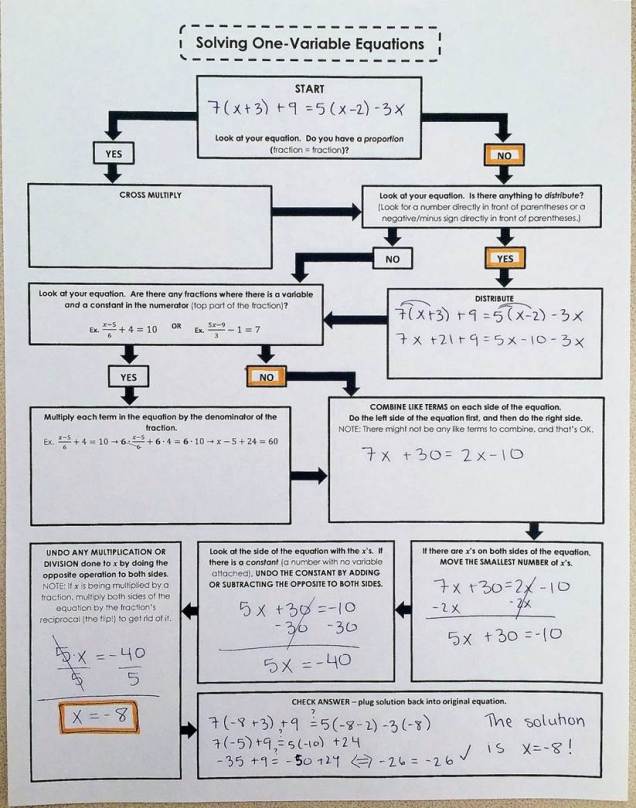
Day 2: Solving Multi-Step Equations with Special Case Solutions
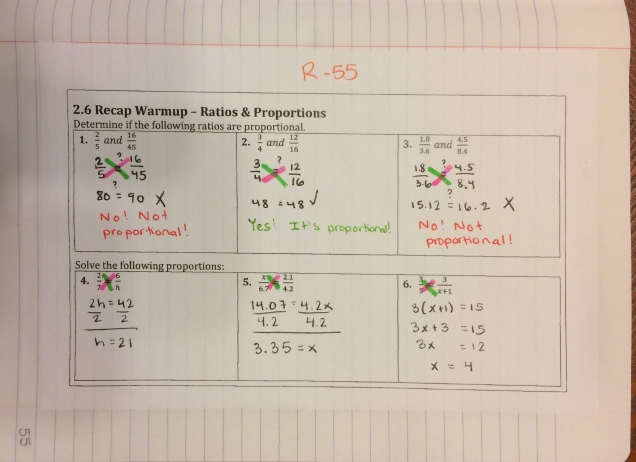
To start off the lesson, we did a recap warm-up over the prior day’s lesson. 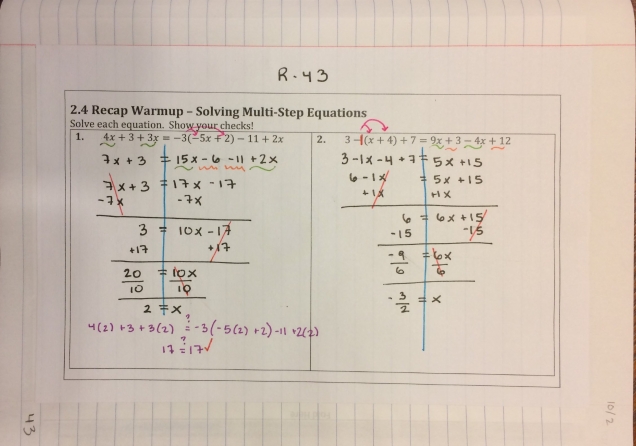
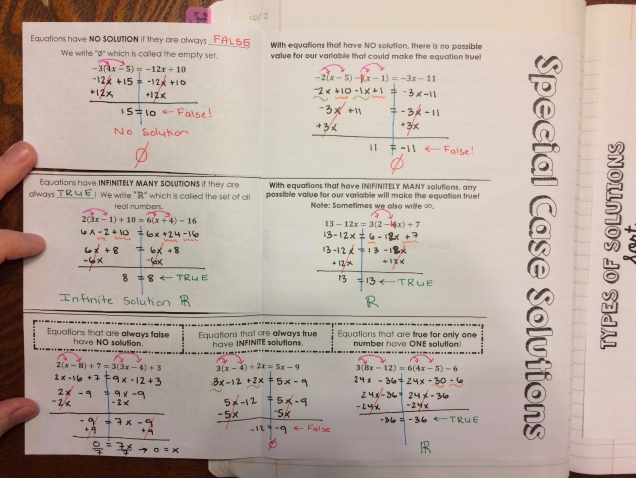
We then went into a foldable that covers what special solutions are and when they arise. 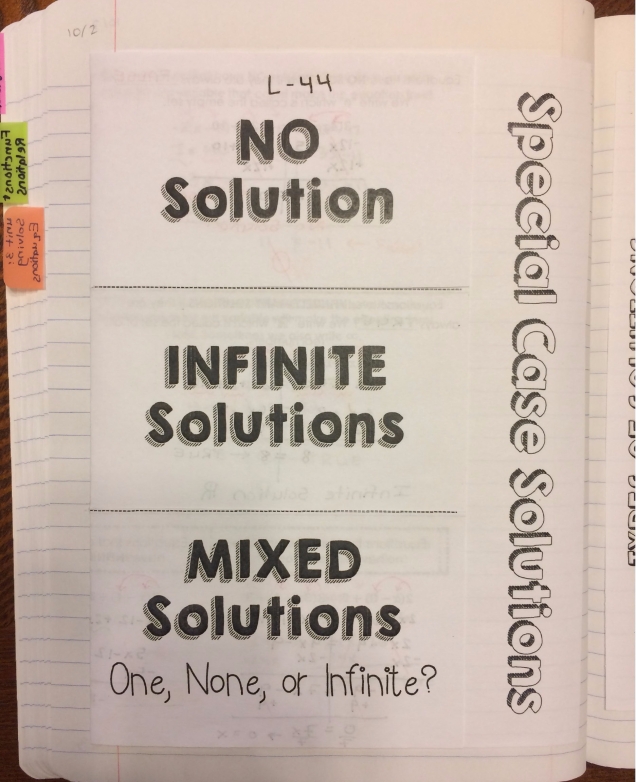
To get even more practice, students did the following Types of Solutions Sort, which emphasized common student errors and misconceptions I’ve noticed in the past. 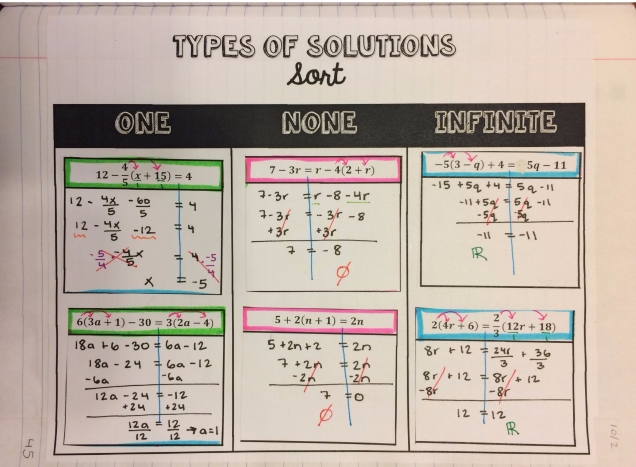
Day 3: Writing Equations to Solve Multi-Step Equations
We started off the lesson with a recap warm-up that contained special solution types. 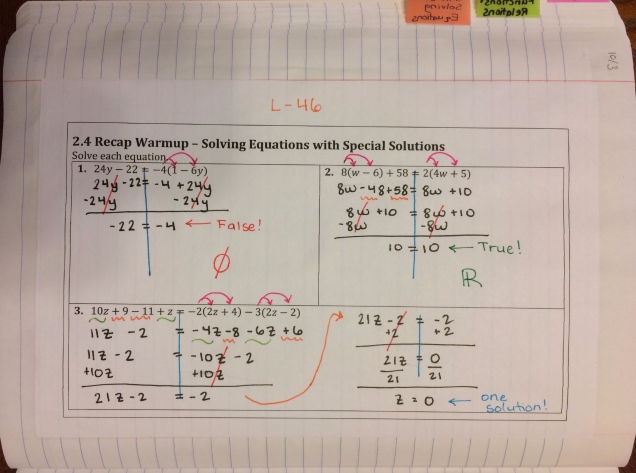
From there, we moved into our main set of notes for the day, with an emphasis on marking the text (NOTE: this is the same color-coding we used in Unit 1). 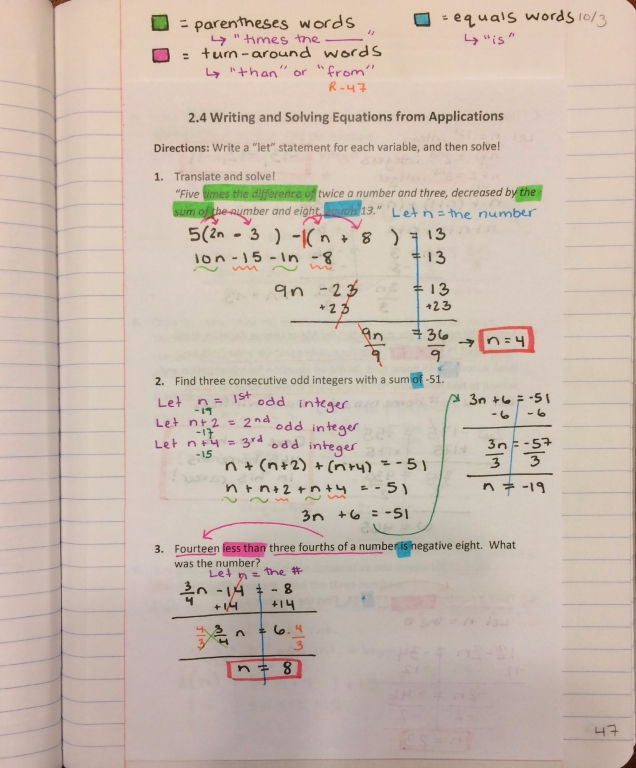
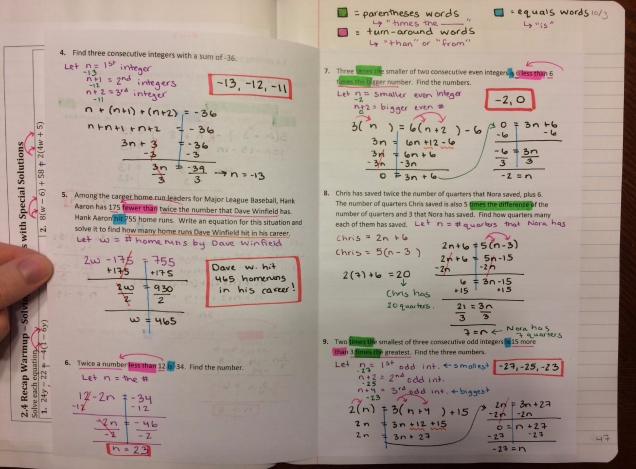
Day 4: Absolute Value Equations
Like usual, we started off the lesson with a recap warm-up of the previous day’s information. 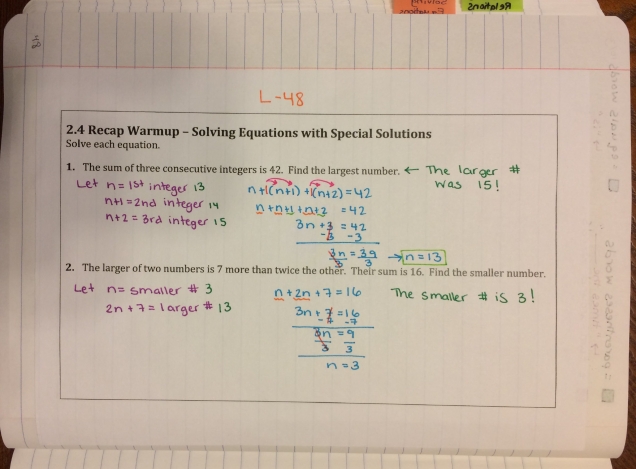
We started off the topic of absolute value equations by really thinking about what an absolute value means/does. 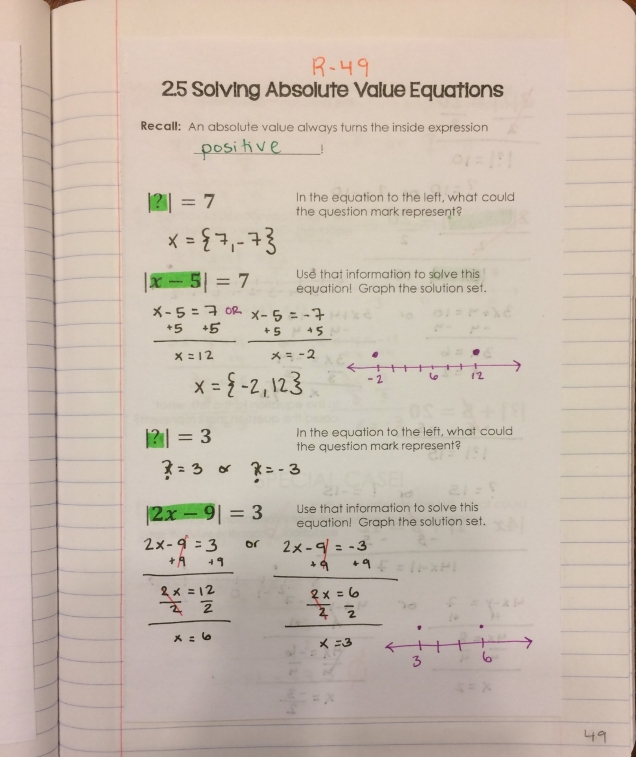
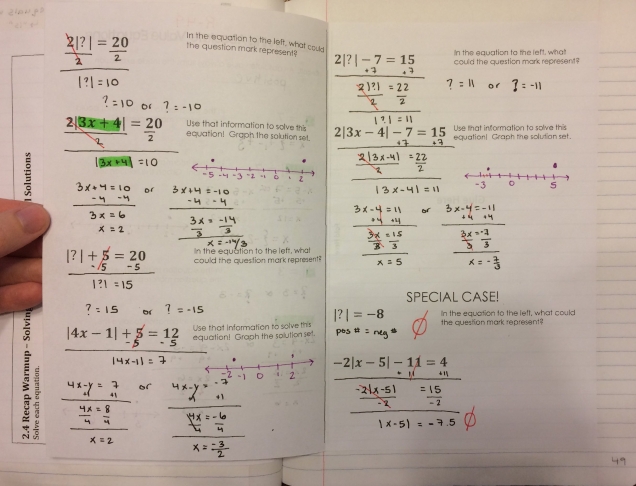
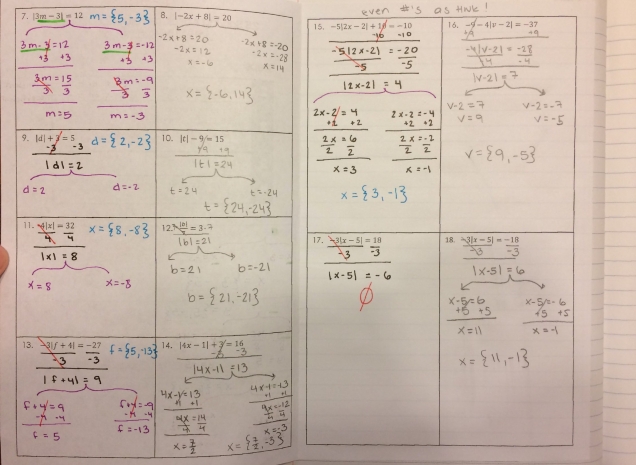
From there, we used the information we’ve gathered to solve absolute value equations a bit more efficiently (without using the modified cover-up question mark method). Students had the even numbered problems as homework that night. 
In addition to the notes that went into the composition books, students were given a flowchart for solving absolute value equations to reference whenever they got stuck. Here’s an example of how they could use it! Just like the others, I keep a class set of these laminated so students can use them with dry erase markers whenever they get stuck. I like to color-code each type of flowchart to make it easy to grab the exact one that they need from that unit. 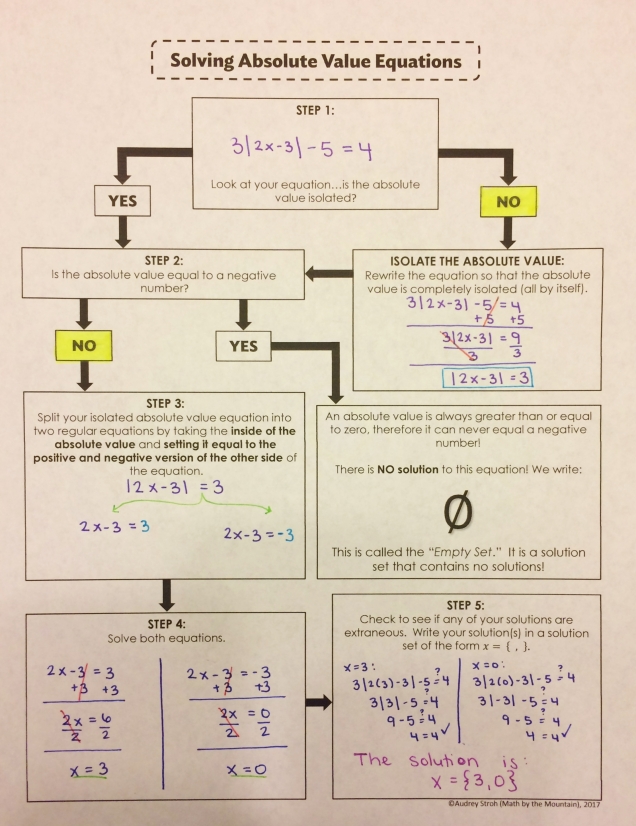
Day 5: Absolute Value Equations Word Problems
To begin the class, we started off by working backwards: writing the absolute value equation that could’ve produced the given solutions. 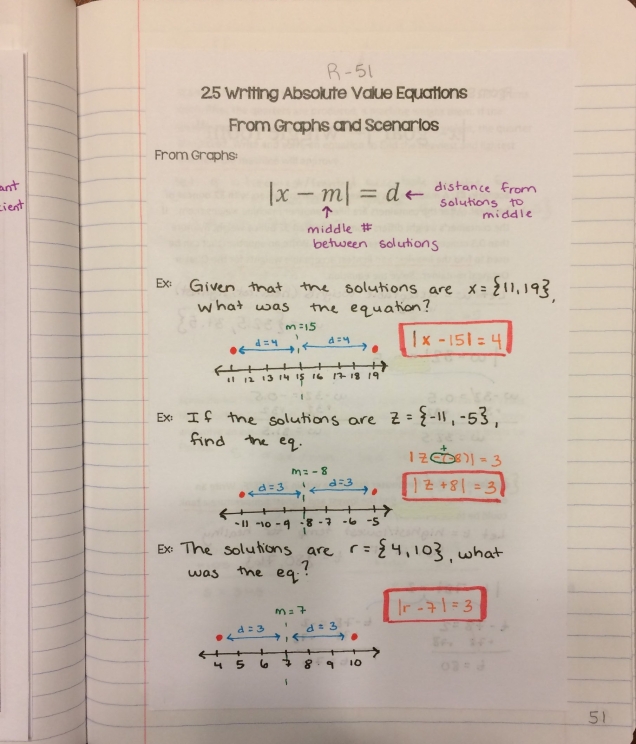
From there, we went into story problems involving absolute value equations. 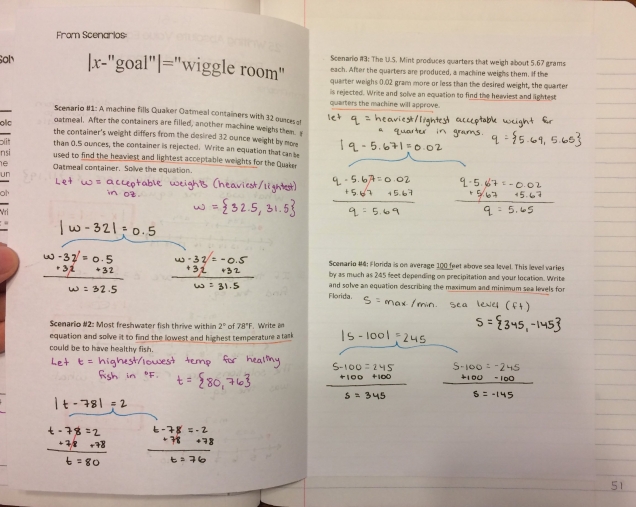
Day 6: Ratios and Proportions
We started the day off with a recap warm-up covering the last two days of information (all absolute value equation related).
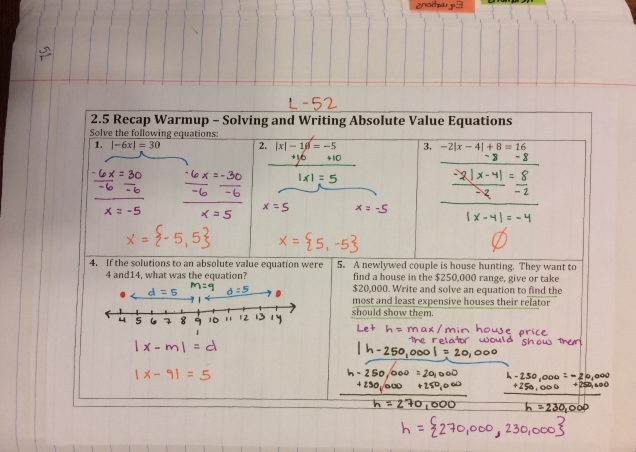
The first thing that we talked about is what a ratio is and what it means to be proportional. 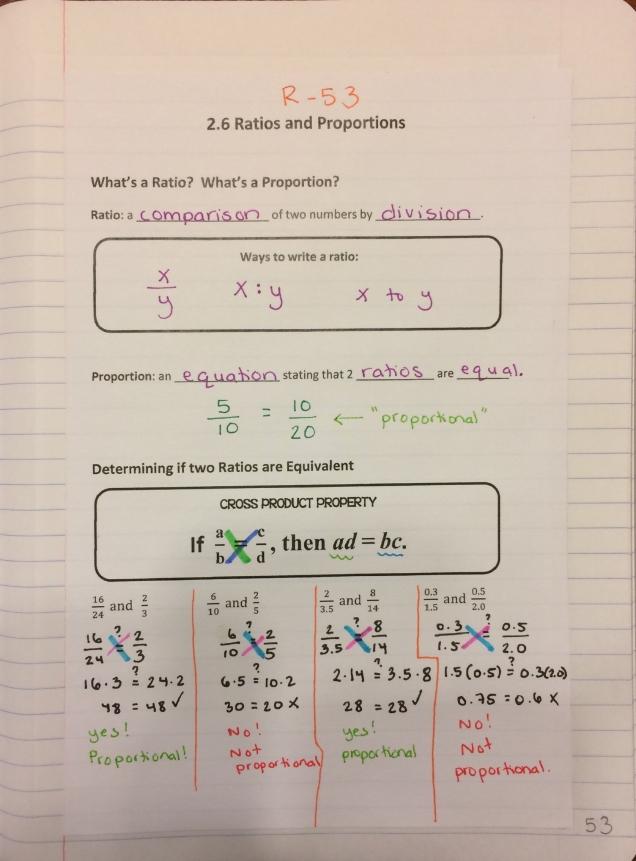
We then used the definition of proportional to solve equations requiring cross-multiplication. 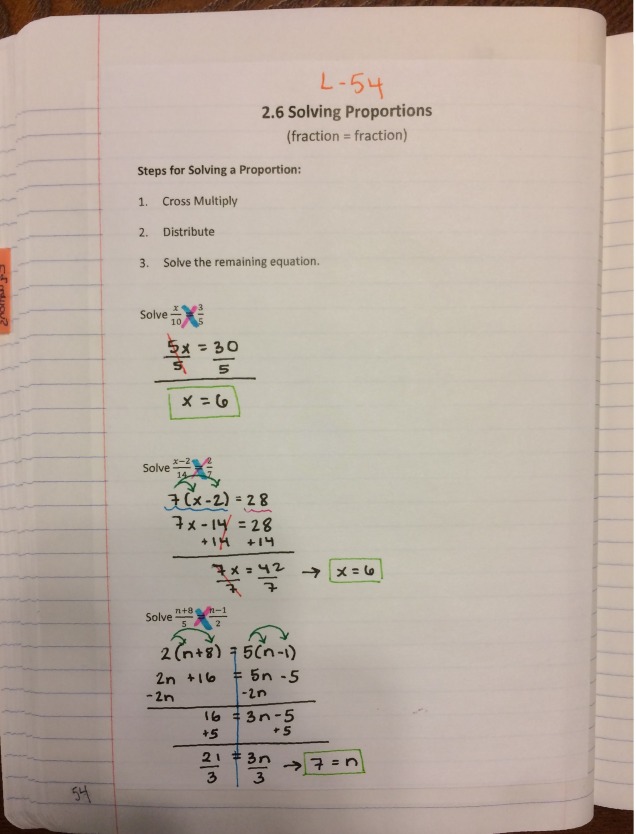
After these examples, students filled out the other side of the flowchart that they were given on Day 1 with a more difficult example of solving for a variable in a proportion. 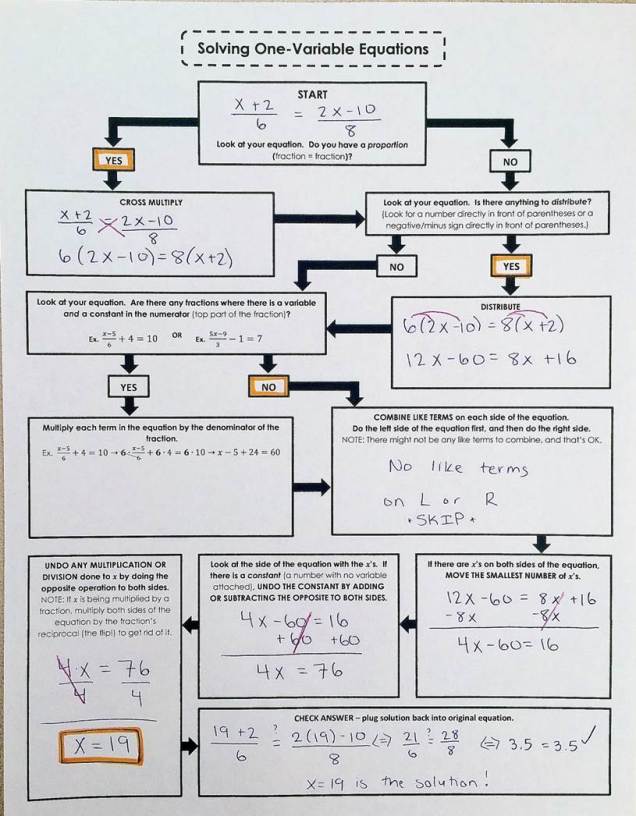
Day 7: Percent of Change
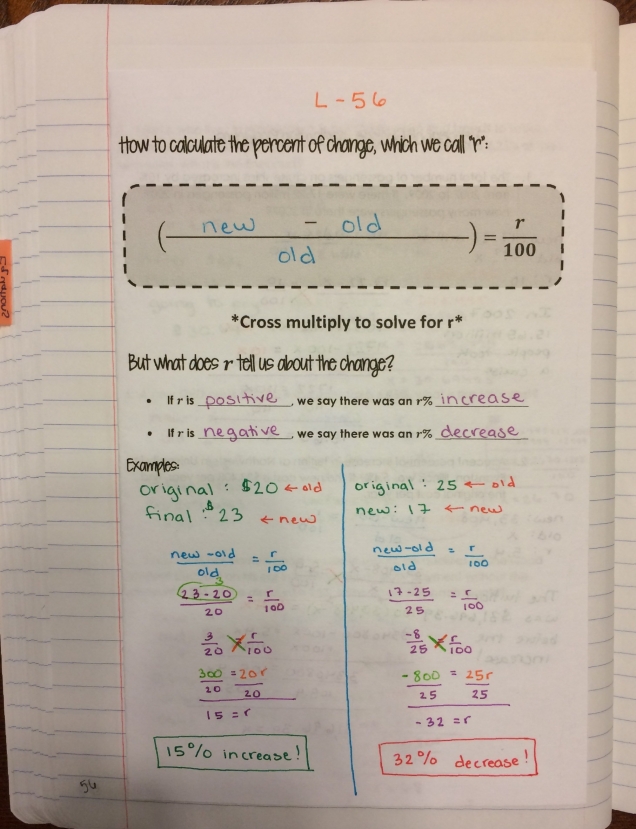
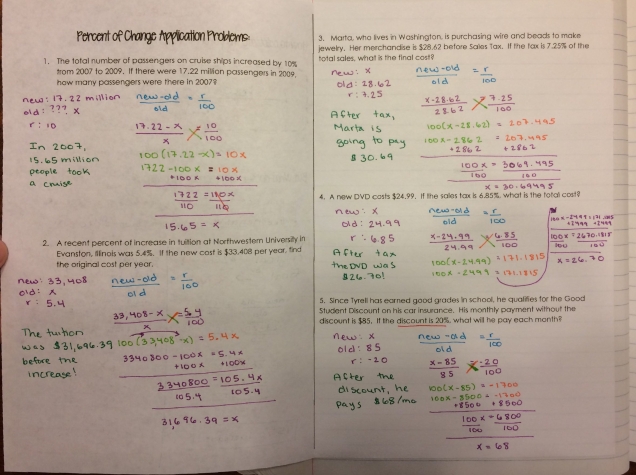
After taking notes, we did this Percent of Change Scavenger Hunt. Students worked really hard on it and had a lot of fun. For some of them, it was difficult to remember to put a negative sign on their r-value when it was a percent decrease!
Day 8: Literal Equations, Part 1
We recap percent of change problems and then move into basic solving literal equations problems. 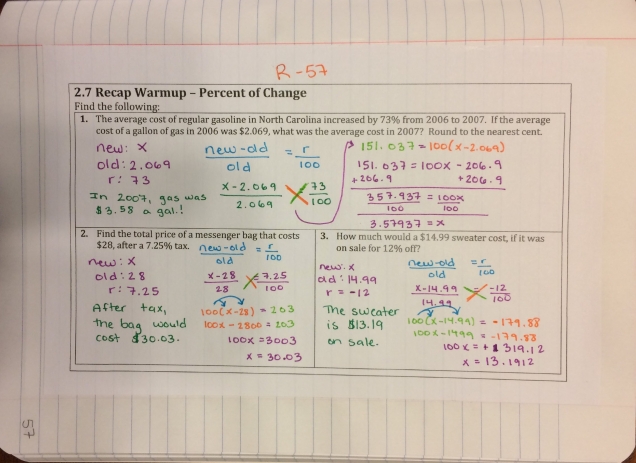
We discuss what a literal equation is, compare and contrast the difference between literal equations and regular equations, and also introduce the flowchart method of solving. 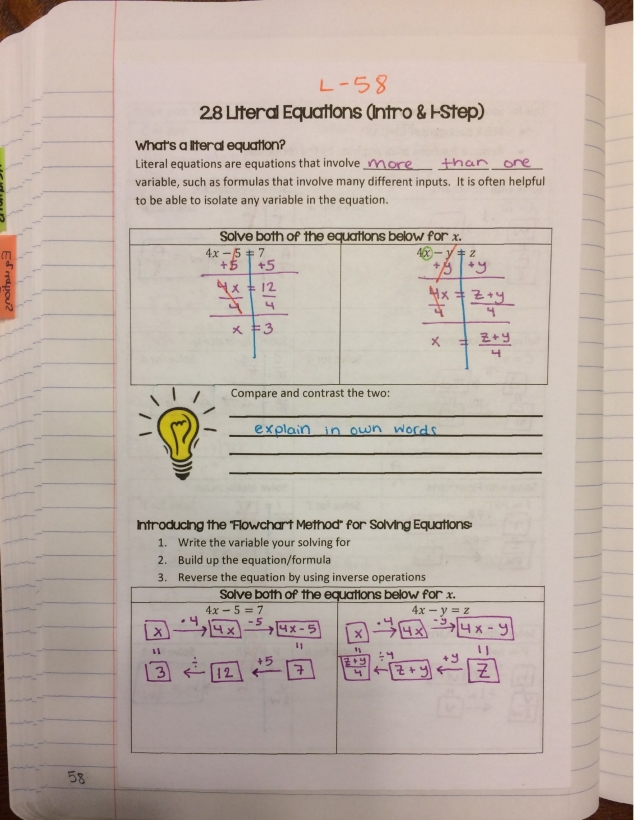
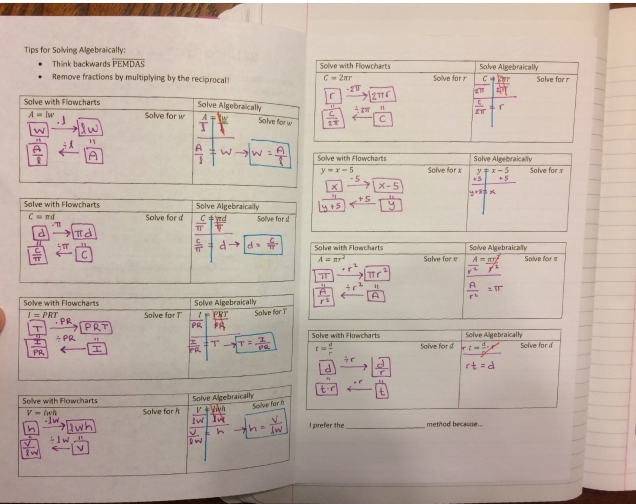
Day 9: Literal Equations, Day 2
We move into more complicated literal equations that require more than one step to solve. After doing a few, students are able to choose which method they wish to solve with (I’m partial to the algebraic method, but some students love the flowchart way). 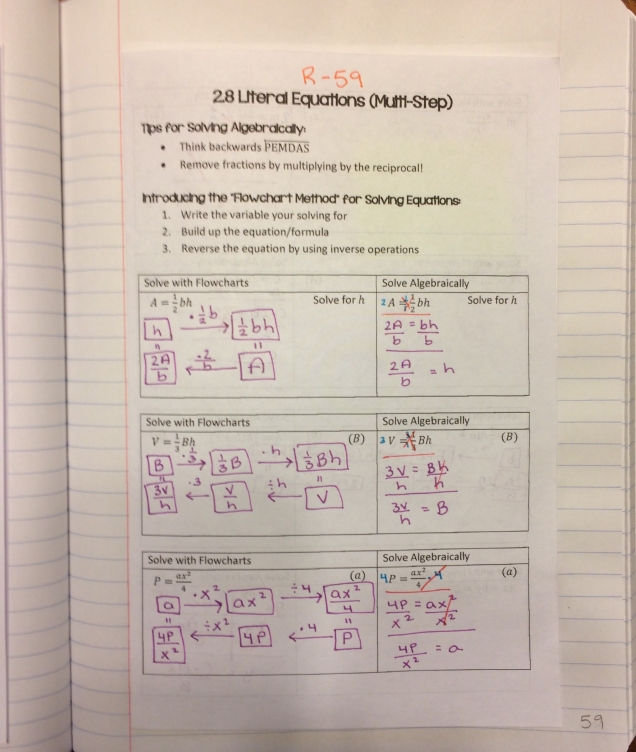
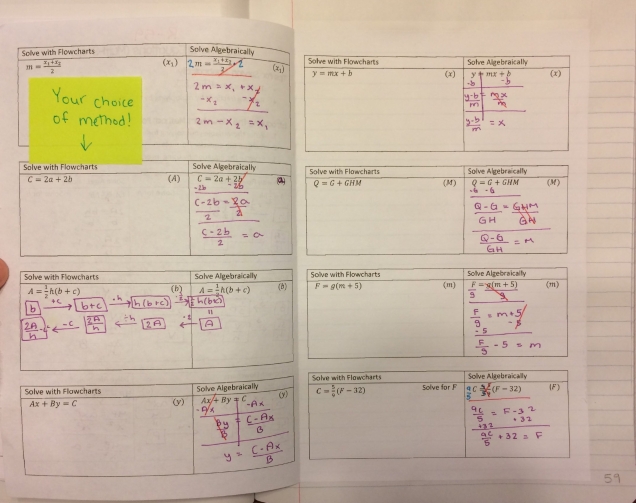
After notes, we play my favorite Connect 4 game for solving literal equations. We only played until 6 people won, which allowed us to get through about 70% of the problems. From there, students spent the remainder of class working on a festive Carving Pumpkins coloring activity for solving literal equations. This activity was awesome because students were super engaged in the coloring (every last one of them–even the boys! PS: I have 22 boys in this one class…ay, yai, yai), and it was super easy for me to find common trends that I might need to readdress (the eyes for Pumpkin #2 were the most common error). Also, for students, this activity is fairly self-checking, which is a great confidence boost for many of them.
Here’s an example that one student colored! She even named the pumpkins. 
Day 10: Stations Review Activity Day
We did a recap warm-up over solving literal equations and then spend the rest of class doing a stations activity with my solving equations unit task cards. 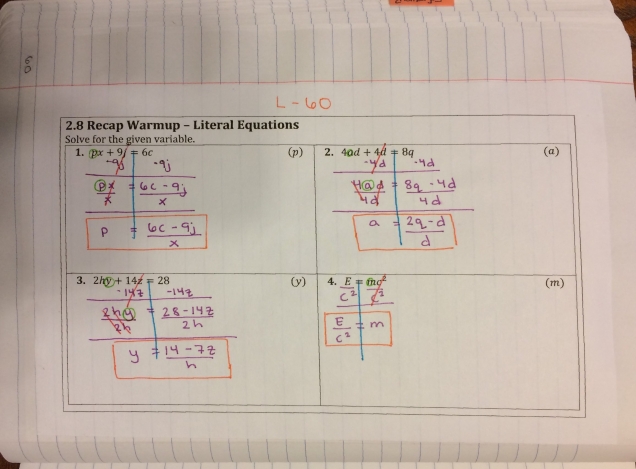
Day 11: Review Day
Day 12: TEST!

